


Buyers argue about GSM and thread count because they are numbers, and numbers are easy to compare. But two towels at the same GSM, or two sheets at the same thread count, can feel and last completely differently — and the reason is almost always the yarn. The words on a spec sheet that decide it — combed, ring-spun, carded, zero-twist, long-staple — are rarely explained. Here is what each actually means, and which combination to ask for.
Start with the fibre: staple length
Before a fibre is spun into yarn, it has a staple length — how long the individual cotton fibres are. This is the single biggest driver of quality.
- Long-staple cotton (and extra-long-staple, the Supima / Egyptian / Giza grades) has longer individual fibres. Longer fibres mean fewer loose ends on the surface, so the yarn is smoother, stronger, and pills far less. It is the foundation of every genuinely premium towel and sheet.
- Short-staple cotton has shorter fibres and more loose ends, which show up as early pilling and a rougher hand. It is cheaper, and it is where a suspiciously low quote usually hides.
If you specify nothing else, specify long-staple. It does more for the finished textile than any other single choice.
Then how it is cleaned: carded vs combed
After cotton is cleaned it is either carded or combed.
- Carded cotton is cleaned and aligned, but the short fibres are left in. Serviceable, cheaper, and fine for budget lines — but it pills sooner and feels less smooth.
- Combed cotton goes a step further: a combing stage removes the short fibres and debris, leaving only the longer, aligned fibres. The result is smoother, stronger, cleaner-feeling yarn that resists pilling. Nearly every quality towel and sheet is combed.
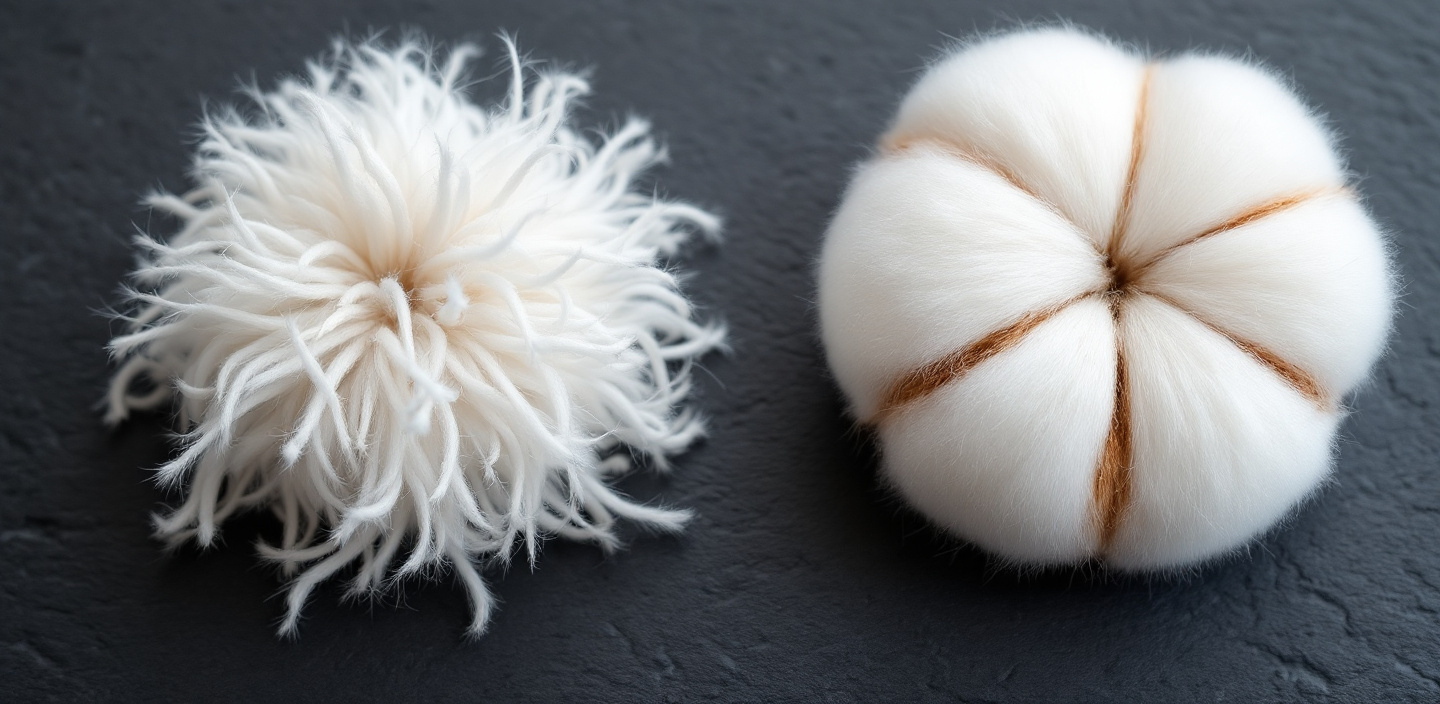 Carded leaves the short fibres in; combing takes them out.
"Combed" on a spec sheet is one of the most reliable quality signals there is. It is also the first corner cut on a cheap quote.
Then how it is spun: ring-spun vs open-end
Spinning twists the fibres into yarn, and the method matters.
- Ring-spun yarn is spun by continuously twisting and thinning the strand, which wraps the fibres tightly around each other. It is softer, stronger and finer — the standard for quality towelling and bed linen.
- Open-end (rotor) yarn is faster and cheaper to produce but coarser and less durable. It shows up in budget towelling.
 Ring-spinning: slower than open-end, and the yarn is softer and stronger for it.
Ring-spun combed long-staple cotton is the phrase you are really asking for when you ask for a "good" towel. Those three terms stack: fibre length, cleaning, and spinning method, each adding quality.
The special case: zero-twist
Zero-twist yarn is spun with almost no twist at all. Because the fibres are not bound tight, the loops stand looser and more open — which makes a zero-twist towel exceptionally soft and highly absorbent, and quick to dry. It is a genuine luxury hand.
The trade-off is durability: with little twist holding the fibres, a zero-twist towel is more prone to pilling and shedding over a hard industrial wash cycle, and it is more expensive. It belongs in a premium, guest-facing line washed on a gentle regime — a spa or a five-star suite — not on a high-turnover commercial laundry route.
Putting it together: what to actually ask for
For most quality hospitality towelling and bed linen:
Combed, ring-spun, long-staple cotton.
That phrase covers the three decisions that matter and rules out the cheap substitutions. From there:
- Want maximum softness and absorbency, gentle laundering → add zero-twist. Accept the shorter life for the luxury hand.
- Buying for a hard commercial laundry route → stay with combed ring-spun, skip zero-twist, and consider a cotton-rich blend for the durability.
- Budget line, price-led → carded, open-end is honest as long as everyone knows that is what it is. The problem is never a budget yarn sold as a budget yarn; it is a budget yarn sold as premium.
The lesson under all of it: GSM and thread count tell you how much cotton is there; the yarn terms tell you how good it is. A 500 GSM combed ring-spun long-staple towel beats a 600 GSM carded open-end one on feel and on life, every time. When a quote is cheap for its weight, the saving is in these words — so read them before you read the number.
What we run
Our towel and bed programmes are specified in combed, ring-spun, long-staple cotton as standard, with zero-twist available on request for premium guest-facing lines and a cotton-rich option where a commercial laundry route needs the extra durability. The weave guides — percale, sateen, terry and the rest — sit on top of the yarn choice, not instead of it.
Send the line and the laundry regime, and we will specify the yarn to match before you commit to a sample.
Frequently asked
- What is the best cotton yarn for hotel towels?
- Combed, ring-spun, long-staple cotton. Long-staple fibres are smoother and pill less; combing removes the short fibres that cause roughness and pilling; ring-spinning makes the yarn softer and stronger. That combination, not a higher GSM, is what separates a quality towel from a cheap one.
- What does zero-twist mean, and is it better?
- Zero-twist yarn is spun with almost no twist, so the pile stands loose and open — which makes the towel exceptionally soft, absorbent and quick-drying. It is a luxury hand, but the loose fibres pill and shed faster under a hard wash cycle, and it costs more. It is best for premium, gently laundered lines — a spa or five-star suite — not a high-turnover commercial route.
- Is combed cotton really worth it over carded?
- For anything a guest touches, yes. Combing removes the short fibres and debris that make carded cotton pill early and feel rough, leaving smoother, stronger, cleaner yarn. It is one of the most reliable quality signals on a spec sheet and one of the first things cut on a cheap quote — so if "combed" is not stated, assume carded and price accordingly.