


"100% cotton" sells. It is on the label of every premium towel and every luxury sheet, and for good reason — nothing a guest touches feels quite like pure long-staple cotton. But a lot of the textiles that actually move through a commercial laundry every day are blends, and that is not a quality failure. It is a different engineering choice, made for a different problem.
Here is when a cotton-rich blend earns its place, and when it does not — stated straight, because a supplier willing to recommend against its own premium line is the one worth trusting.
What each one is actually doing
100% cotton is all natural fibre. It is the most absorbent, the softest to the hand, and the most breathable option, and it takes dye beautifully. Its weaknesses are the flip side of those strengths: it shrinks on first wash unless pre-shrunk, it wrinkles, it is slower to dry, and over hundreds of industrial cycles it thins and loses loft faster than a reinforced blend.
Cotton-rich means mostly cotton with a measured percentage of polyester — commonly an 80/20 or a 50/50, depending on the job. The polyester is not there to cut cost first; it is there to add durability, dimensional stability and dry speed. Poly fibre resists abrasion, holds its shape, shrinks less, and releases water faster. The cost usually comes down too, but that is a consequence, not the main reason a laundry manager specifies a blend.
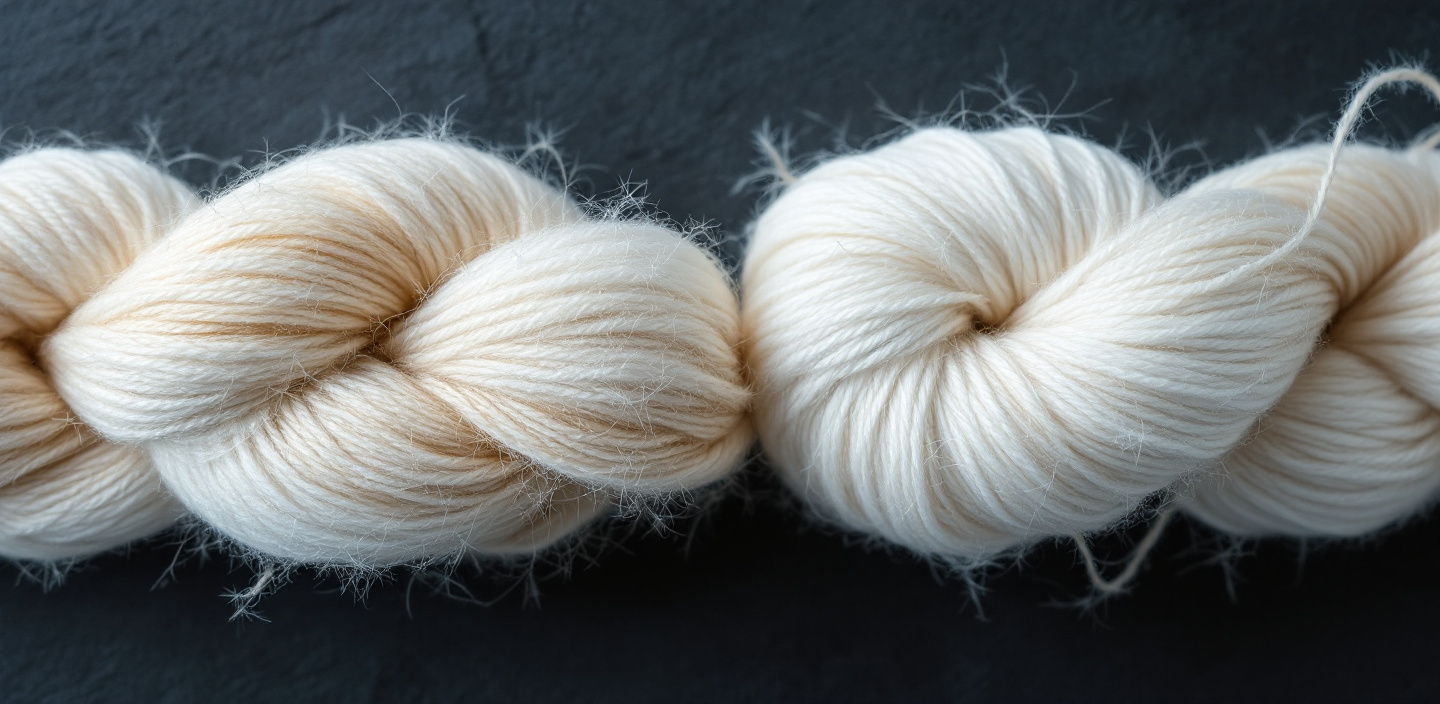 The fibre decides the hand: pure cotton is softer, a blend is tougher.
So the trade is simple to state: cotton gives you hand-feel and absorbency; polyester gives you durability, stability and speed. A blend buys some of the second at the cost of some of the first.
Where the blend genuinely wins
 On a high-wash laundry route, a measured blend earns its place.
- High-turnover commercial laundry routes. A piece that is washed daily at high temperature and tumbled hard lives longer as a blend. Linen-hire operators and busy institutional laundries carry replacement cost on their own books, so a towel that survives 50 more cycles is money, not a downgrade.
- Bed linen that must not shrink. A poly-cotton percale holds its cut dimensions through wash after wash, which matters when a fitted sheet has to keep fitting the mattress.
- Fast turnaround. Where a textile has to be back in service quickly, the faster dry time of a blend is an operational advantage, not a luxury compromise.
- Healthcare and back-of-house. Durability and stability outrank hand-feel where the textile is a working tool rather than a guest experience.
Where 100% cotton is worth it
- Anything guest-facing in a premium property. The bath towel a five-star guest wraps in, the sheet they sleep on — the hand-feel is the product, and a blend reads as a compromise against it.
- Spa and wellness. Softness and absorbency against bare skin are the whole point.
- Retail lines sold on feel. A shopper judges a towel by hand in three seconds; pure cotton wins that test.
How to decide
The honest rule: specify by who touches it and how often it is washed.
- Guest-facing, premium, washed on a normal cycle → 100% cotton, combed long-staple.
- Back-of-house, institutional, high-wash, fast turnaround → cotton-rich blend.
- A property with both → run both, and do not apologise for it. The guest suite gets pure cotton; the pool-deck and the staff textiles get the blend.
One caution on buying cheap "100% cotton": if a quote for pure cotton is unusually low for its weight and thread count, the saving is in the yarn — short-staple, carded, under-combed — not in the blend. A good cotton-rich towel will outlast and outperform a bad 100% cotton one. The fibre percentage is only half the story; the yarn behind it is the other half.
What we run
We supply both, honestly specified. Our cotton-rich programmes use a measured blend where durability, stability or dry speed is the priority — commercial laundry towelling and institutional bed linen; our pure-cotton programmes run combed long-staple for the guest-facing lines across bath towels and institutional textiles. Where a brief is unsure, we will tell you which way the balance should tip rather than defaulting to the dearer option.
Send the use case and the wash regime, and we will recommend the composition before you commit to a sample.
Frequently asked
- Is cotton-rich worse than 100% cotton?
- No — it is a different trade-off. 100% cotton is more absorbent, softer and more breathable, which is why it is right for guest-facing and premium lines. A cotton-rich blend adds polyester for durability, dimensional stability and faster drying, which is right for high-wash commercial laundry routes and bed linen that must not shrink. Each wins at a different job.
- What does 80/20 or 50/50 mean on a towel?
- The ratio of cotton to polyester by content. An 80/20 towel is 80% cotton, 20% polyester — mostly the cotton hand-feel with added durability and dry speed. A 50/50 leans further toward stability and longevity at some cost to softness. The right ratio depends on how hard the textile is laundered and whether a guest touches it.
- Will a blend feel noticeably different to a guest?
- At a high cotton percentage like 80/20, the difference in hand-feel is small and most guests will not notice on a back-of-house or pool towel. On a premium in-room towel or a bed sheet, a discerning guest can feel the difference, which is why those lines should stay 100% combed cotton. Match the composition to whether hand-feel is part of the experience.